





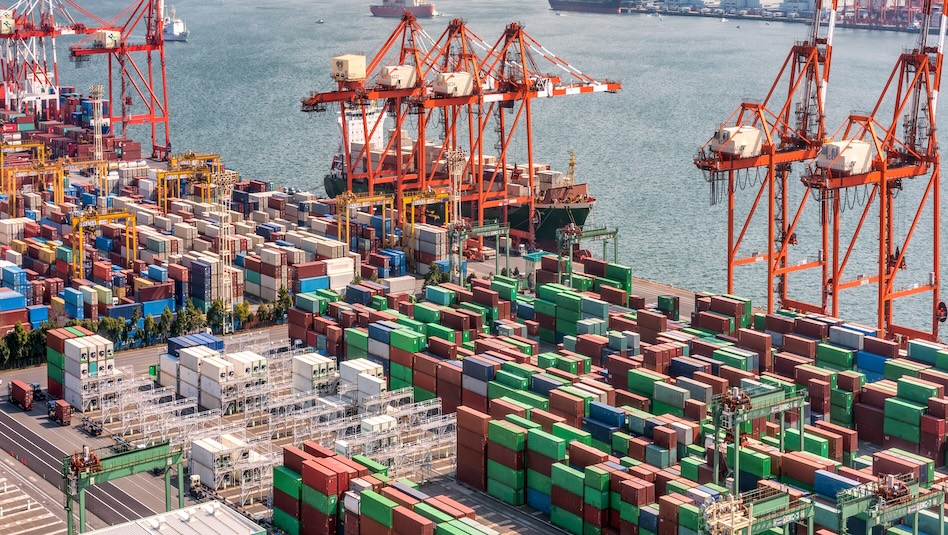
Philippines Trade Update: Imports weaken on tepid demand
 DOWNLOAD
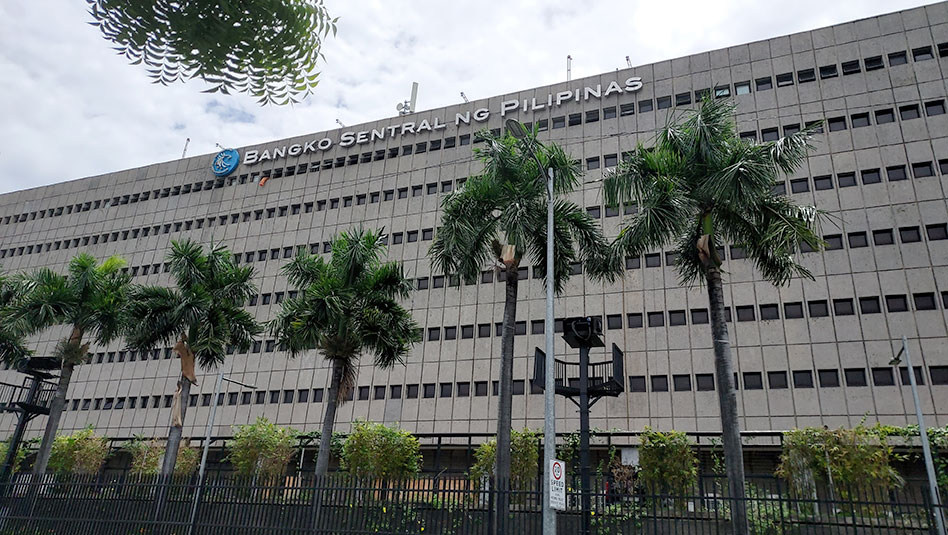
Policy Rate Updates: BSP outlook — cloudy with a chance of rate cut
DOWNLOAD
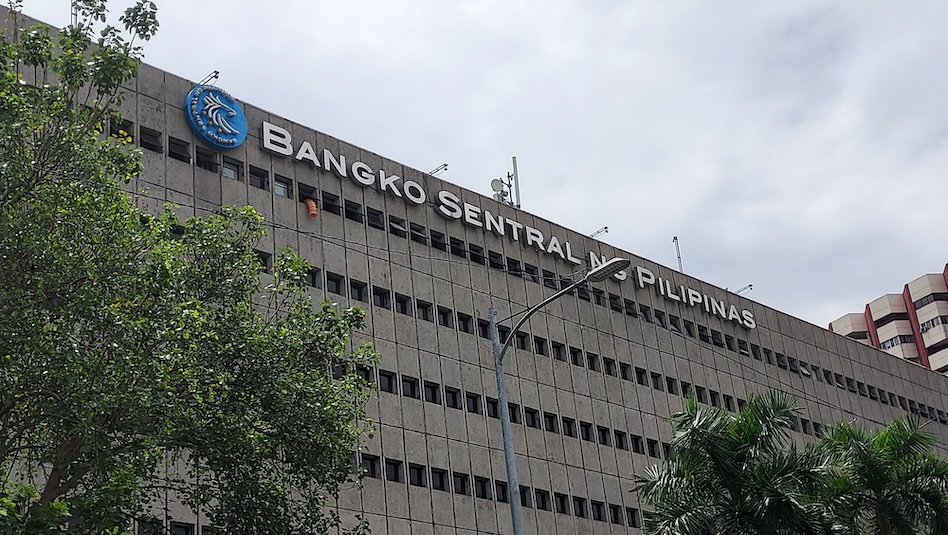
January Economic Update: Growth slows, prices rise
DOWNLOAD


Nomura slashes Philippine growth forecast amid graft scandal
 By BusinessWorld
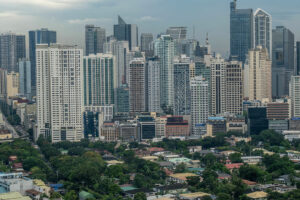


PHILIPPINE ECONOMIC GROWTH may slow to 4.7% this year, as government spending is expected to further decline amid the corruption investigation in infrastructure projects, Nomura Global Markets Research said.
In a report dated Oct. 27, Nomura Chief ASEAN (Association of Southeast Asian Nations) Economist Euben Paracuelles and Macroeconomic Research Analyst Yiru Chen said the gross domestic product (GDP) forecast was slashed to 4.7% this year from 5.3% previously as downside risks increased due to the corruption scandal involving flood control projects.
“This pencils in GDP growth slowing to just 4% in the second half from 5.4% in the first half and is based on the assumption that the decline in government expenditures in September will worsen in the next 3-4 months,” they said.
Nomura’s latest forecast is below the government’s 5.5-6.5% GDP growth target for the year and is slower than the 5.7% growth in 2024.
“Taking into account the sharp drop in fiscal spending in September, we think the ‘bad scenario’ on the growth impact of the ongoing corruption scandal is materializing,” they said.
Third-quarter GDP data will be released on Nov. 7.
President Ferdinand R. Marcos, Jr. had flagged anomalous flood control projects during his State of the Nation Address in late July. This sparked several investigations into alleged corruption involving lawmakers, government officials, and private contractors.
Latest Treasury data showed government expenditures declined by 7.53% in September, worsening from the 0.7% drop in August, mainly due to lower spending by the Department of Public Works and Highways. Nomura also noted that government spending declined by 2.8% in the third quarter, a reversal of 1.6% growth in the second quarter.
“Excluding interest payments and debt servicing, expenditure growth slumped even more to -10.2% y-o-y (year on year) in September from -3.5% in August, the weakest since 2020. This suggests a relatively rapid deterioration in the pace of budget disbursements after President Marcos brought to light the corruption scandal of flood control projects,” they said.
Nomura also noted that the reallocation of funds to other types of capital expenditures such as school buildings has been “challenging” to implement.
“In addition, we incorporate some spillovers into other components of domestic demand, which were also evident in these previous episodes, including household consumption spending. Our forecast continues to take into account the impact of the US tariffs, which, as we have argued before, pose significant headwinds for goods exports,” they said.
The US had imposed a 19% duty on many goods from the Philippines starting Aug. 7.
Nomura also maintained its fiscal deficit forecast at 5.5% of GDP for this year.
“The decline in government expenditures, which we now assume in the coming months (under the ‘bad’ scenario), puts the MTFF (medium-term fiscal framework) target of 5.5% still within reach. Nevertheless, our fiscal deficit forecast implies a weaker fiscal impulse in Q4, when the output gap will likely remain negative,” they said.
For 2026, Nomura maintained its Philippine GDP forecast at 5.6%, but uncertainty over the timely passage of the 2026 national budget poses risks to the outlook.
“For now, we monitor signs of whether the budget can be passed on time, i.e. by December. If not, the ‘severe’ scenario could play out, potentially prolonging fiscal tightening with no new disbursements allowed until a new budget is enacted,” they said.
RATE CUTS
Meanwhile, the Bangko Sentral ng Pilipinas (BSP) will likely implement another 50 basis points (bps) worth of cuts in this easing cycle, bringing the benchmark rate to 4.25%.
“We still pencil in a 25-bp cut at BSP’s next meeting in December and another 25 bps in Q1 2026, i.e. a more frontloaded trajectory, based on our view that the corruption scandal could hit growth in the near term significantly,” Nomura said.
The central bank lowered borrowing costs earlier this month by 25 bps to 4.75%. Its latest move brought its total reductions to 175 bps since it began its easing cycle in August 2024.
“Still, we continue to see the risk of BSP delivering additional policy rate cuts next year if the more ‘severe’ scenario materializes, including a delay in the enactment of the 2026 budget,” they added.
Separately, Budget Assistant Secretary Romeo Matthew T. Balanquit said easing inflation rates and low borrowing costs could still drive the country’s third-quarter growth.
“My only good hope is that we have a low inflation rate, 1.7% year to date,” he told reporters on the sidelines of an event on Monday. “So, with that, I am expecting a high contribution [from household] consumption.”
Inflation accelerated to 1.7% in September, faster than 1.5% in August but slower than the 1.9% in the same month last year. In the nine-month period, headline inflation matched the Bangko Sentral ng Pilipinas’ (BSP) 1.7% full-year target.
“And one more would be the investment because of the CREATE MORE (Corporate Recovery and Tax Incentives for Enterprises to Maximize Opportunities for Reinvigorating the Economy) and also the low interest rates. I am hopeful that the private sector will step up,” Mr. Balanquit added.
IMPACT ON LUXURY GOODS, SERVICES
Meanwhile, Capital Economics said the corruption scandal may not just affect investments but also hurt sales of luxury goods in the country.
“The experience from other emerging markets suggest that, even if the ongoing corruption scandal in the Philippines doesn’t fuel further unrest, a more concerted effort by the government to clamp down on graft could hurt investment as well as purchases of luxury goods and services,” it said in an Oct. 22 report.
Even if unrest is avoided, Capital Economics said there could be more concerted effort to look into corruption across the economy.
“The resulting backdrop of heightened political uncertainty and fear of getting caught up in corruption allegations could prompt firms to delay investment,” it said.
It noted individuals may also avoid buying land or property, while others with illicit gains could move assets abroad “which may result in a spike in capital outflows and weigh on the currency.”
“The government could also try to clamp down on ostentatious public sector consumption. That could weigh on demand for luxury goods and services,” Capital Economics said.
It also said the Philippine government could try other policies to curb corruption such as demonetization.
BSP Governor Eli M. Remolona, Jr. has already rejected a proposal to demonetize P1,000 and P500 bills as an anti-money laundering measure, saying it may do more harm than good.
“We’ve warned before that if the government turns to populist measures, investors could build in higher risk premia on Filipino assets,” Capital Economics said. — K.K.Chan
This article originally appeared on bworldonline.com