





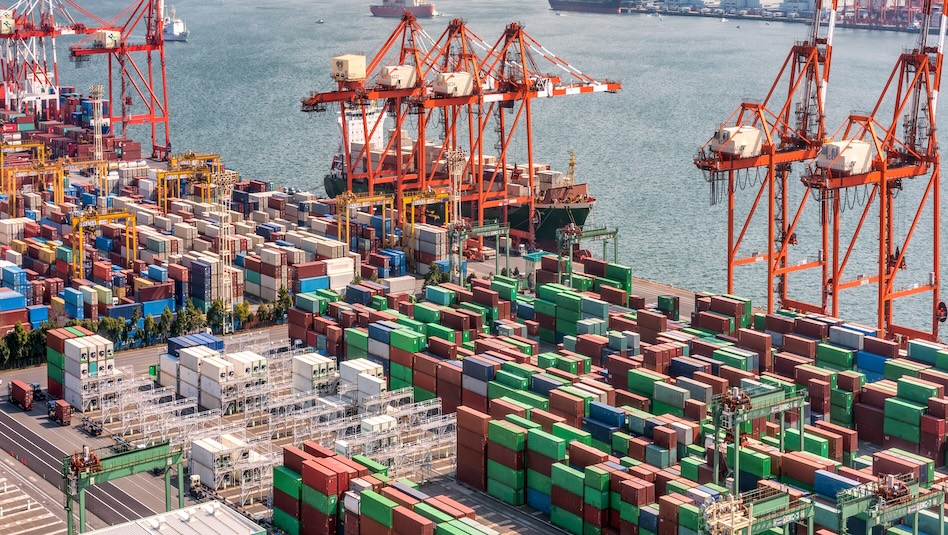
Philippines Trade Update: Imports weaken on tepid demand
 DOWNLOAD
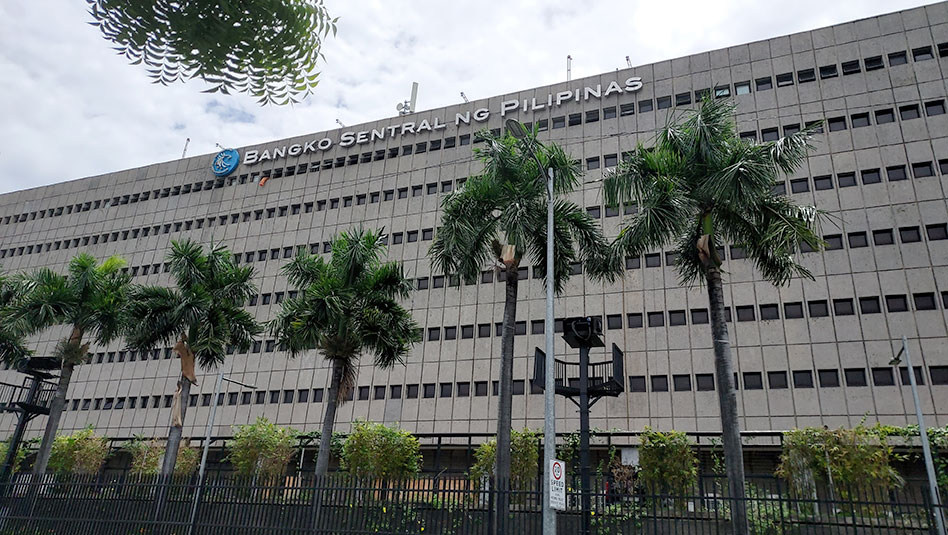
Policy Rate Updates: BSP outlook — cloudy with a chance of rate cut
DOWNLOAD
January Economic Update: Growth slows, prices rise
DOWNLOAD


ADB keeps PHL growth forecasts for 2024, 2025
 By BusinessWorld



The Asian Development Bank (ADB) has kept its Philippine economic growth forecasts for this year and 2025, with expansion expected to be driven by easing inflation and lower interest rates.
Philippine gross domestic product (GDP) is expected to expand by 6% this year and 6.2% in 2025, the ADB said in its December 2024 Asian Development Outlook report, unchanged from its September forecasts.
Both projections are within the government’s revised GDP growth targets of 6%-6.5% for 2024 and 6%-8% for 2025.
“Household consumption and investment continue to drive the economy with both rising faster in the third quarter. Moderating inflation and monetary policy easing should continue to support growth,” the multilateral lender said in a report on Wednesday.
“On the supply side, buoyant services sector, construction, and manufacturing are contributing to overall growth,” the ADB said.
Services will remain a major growth driver for the Philippines, “with retail trade, tourism, and information technology–business process outsourcing as major contributors,” it added.
“Public infrastructure projects continue to lift growth, along with brisk private construction,” the ADB said.
It expects the Philippines to be the second-fastest growing economy in Southeast Asia this year, behind Vietnam with 6.4% and ahead of Indonesia (5%), Malaysia (5%), Singapore (3.5%), and Thailand (2.6%).
“While Vietnam sees rising foreign investment, other Southeast Asian economies like Indonesia and the Philippines are on track to meet previous growth forecasts,” the ADB said.
“However, geopolitical tensions, trade fragmentation, and severe weather events—such as Typhoon Yagi and Tropical Storm Trami — pose risks to growth, particularly in agriculture and infrastructure,” it added.
A series of storms hit the Philippines in November, resulting in about P10 billion worth of farm damage, according to the Department of Agriculture.
The World Bank on Tuesday trimmed its GDP growth projection for the Philippines to 5.9%, from 6%, reflecting the impact of typhoons.
At the same time, the ADB cut its inflation forecast for the Philippines this year to 3.6% from 3.3%. It kept its inflation projection at 3.2% for 2025.
“Inflation is expected to remain within the central bank’s 2% to 4% target, providing scope for further monetary policy easing,” it said.
Since August, the Bangko Sentral ng Pilipinas has cut rates by 50 basis points, bringing the benchmark rate to 6%.
The Monetary Board is set to hold its final policy-setting meeting of the year on Dec. 19.
US policy risks
Meanwhile, developing Asia is likely to grow more slowly than previously thought this year and next, and the outlook could worsen if President-elect Donald J. Trump makes swift changes to US trade policy, the ADB said.
Developing Asia, which includes 46 Asia-Pacific countries stretching from Georgia to Samoa — and excludes Japan, Australia and New Zealand — is projected to grow 4.9% this year and 4.8% next year, slightly lower than the ADB’s forecasts of 5% and 4.9% in September.
The downgraded growth estimates reflect lackluster economic performance in some economies in the third quarter and a weaker outlook for consumption, the bank said.
Growth forecasts for China remain unchanged at 4.8% for 2024 and 4.5% for 2025, but the ADB lowered its projections for India to 6.5% for 2024 from 7% previously, and to 7% for next year from 7.2%.
“Changes to US trade, fiscal, and immigration policies could dent growth and boost inflation in developing Asia,” the ADB said in its report, though it noted most effects were likely to manifest beyond the 2024-2025 forecast horizon.
Mr. Trump, who takes office on Jan. 20, has threatened to impose tariffs in excess of 60% on US imports of Chinese goods, crackdown on illegal migrants, and extend tax cuts.
“Downside risks persist and include faster and larger US policy shifts than currently envisioned, a worsening of geopolitical tensions, and an even weaker PRC (People’s Republic of China) property market,” the ADB said.
It lowered its inflation forecasts for 2024 and 2025 to 2.7% and 2.6%, respectively, from 2.8% and 2.9%, due to softening global commodity prices. — Aubrey Rose A. Inosante and Reuters
This article originally appeared on bworldonline.com