







Philippines Trade Update: Imports weaken on tepid demand
 DOWNLOAD
Policy Rate Updates: BSP outlook — cloudy with a chance of rate cut
DOWNLOAD
January Economic Update: Growth slows, prices rise
DOWNLOAD


Hot money outflows reach USD 529.7 million in Oct., BSP says
 By BusinessWorld



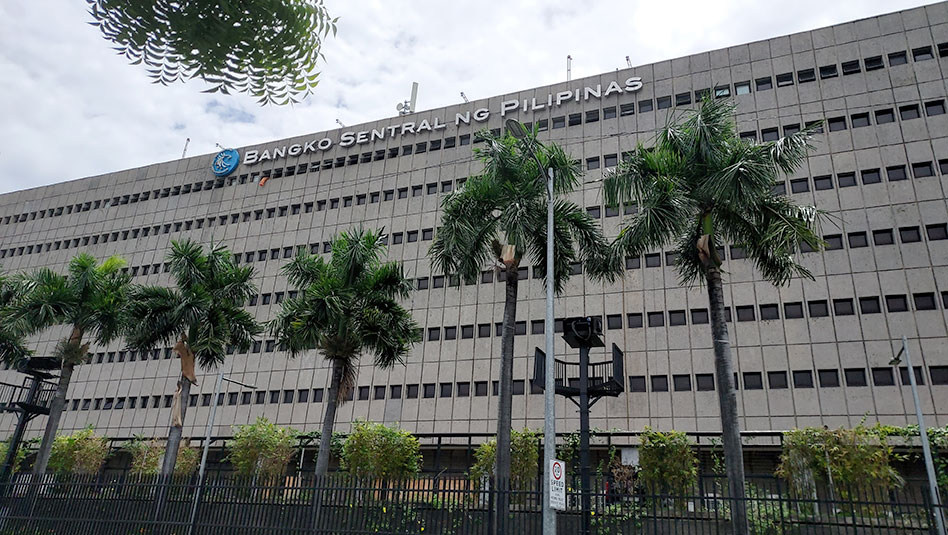
More short-term foreign investments flowed out of the Philippines than what entered in October, data from the Bangko Sentral ng Pilipinas (BSP) showed.
Transactions on foreign investments registered with the central bank through authorized banks posted a net outflow of USD 529.68 million in October, higher than the USD 328.19-million outflow in the same month a year ago.
This was also a reversal of the USD 1.03-billion net inflow in September.
These foreign portfolio investments are also called “hot money” due to the ease by which these funds enter and leave the economy.
Central bank data showed gross outflows of hot money increased by 56.7% to USD 2.01 billion in October from USD 1.28 billion a year ago. It also jumped by 33.4% from the USD 1.5-billion outflows in September.
“The US remains to be the top destination of outflows, receiving USD 889.06 million (or 44.2%) of total outward remittances,” the BSP said.
Meanwhile, gross inflows rose by 55.1% to USD 1.48 billion from USD 954.38 million in the same month a year prior. Month on month, gross inflows declined by 41.5% from USD 2.53 billion.
The top five investor economies during the month were the United Kingdom, Singapore, the United States, Luxembourg and Malaysia, accounting for the bulk or 87.8% of foreign portfolio investment inflows.
Most of the investments (54.5%) went to Philippine Stock Exchange-listed securities in banks; holding firms; transportation services; property; and food, beverage and tobacco. The rest (45.5%) went to peso government securities.
In the January-October period, BSP-registered foreign investments yielded a net inflow of USD 2.49 billion, a turnaround from the USD 715.43-million outflow in the same period in 2023.
Broken down, gross inflows stood at USD 15.02 billion, while gross outflows amounted to USD 12.52 billion in the first 10 months.
The BSP expects foreign portfolio investments to yield a net inflow of USD 4.2 billion in 2024.
Rizal Commercial Banking Corp. Chief Economist Michael L. Ricafort said more hot money exited the country as geopolitical risks in the Middle East triggered profit taking in global and local markets.
“Regional geopolitical tensions and local economic risks, such as fiscal consolidation and concerns over growth momentum, have likely added to investors’ cautious stance,” John Paolo R. Rivera, a senior research fellow at the Philippine Institute for Development Studies said.
Markets were also pricing in Donald J. Trump’s win ahead of the US presidential elections last November, Mr. Ricafort said. Mr. Trump’s protectionist policies were expected to stoke US inflation and impact the US Federal Reserve’s easing cycle.
“The Fed’s monetary policy stance likely weighed on investor sentiment. While expectations of easing US policy rates could eventually attract funds, the current cautious environment contributed to capital outflows,” Mr. Rivera said.
For the coming months, Mr. Ricafort said more short-term capital could enter the country amid the recent cut in banks’ reserve requirement ratio (RRR).
The BSP reduced the RRR for universal and commercial banks and nonbank financial institutions with quasi-banking functions by 250 basis points to 7% from 9.5%, effective on Oct. 25.
“(This) would have infused about P400 billion into the banking system in terms of more loanable funds by banks, as well as more funds by banks for investments in bonds and other fixed-income investments, stocks, foreign currencies, property and other investments,” he added.
The country’s improved credit rating outlook will also support investor sentiment, Mr. Ricafort said.
Last week, S&P Global Ratings affirmed the Philippines’ investment grade rating on Tuesday and raised its outlook to “positive” from “stable,” reflecting the country’s strong growth potential and improved institutional strength. — Luisa Maria Jacinta C. Jocson
This article originally appeared on bworldonline.com