





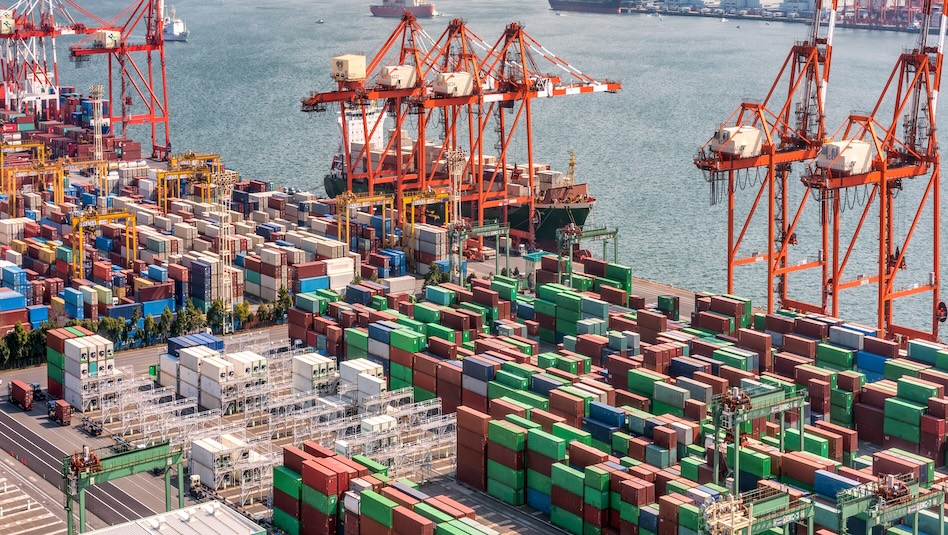
Philippines Trade Update: Imports weaken on tepid demand
 DOWNLOAD
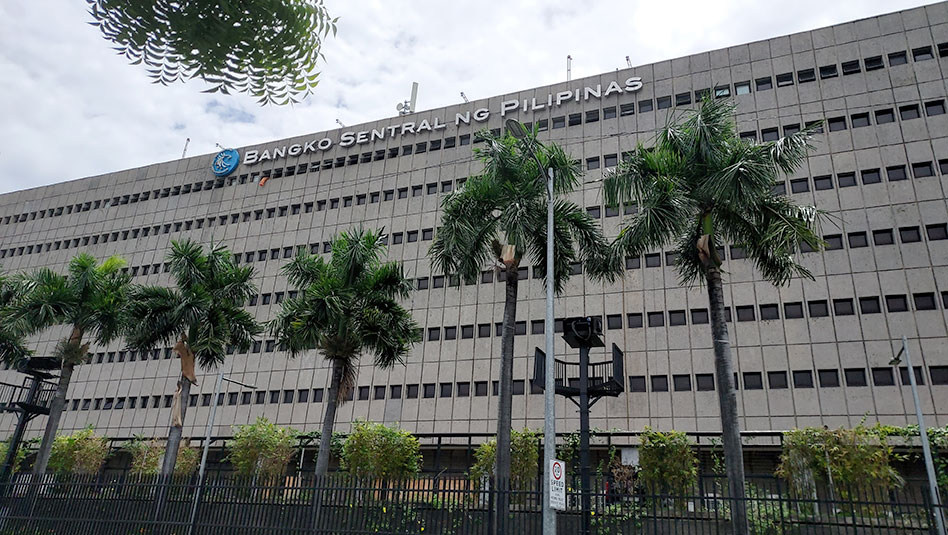
Policy Rate Updates: BSP outlook — cloudy with a chance of rate cut
DOWNLOAD
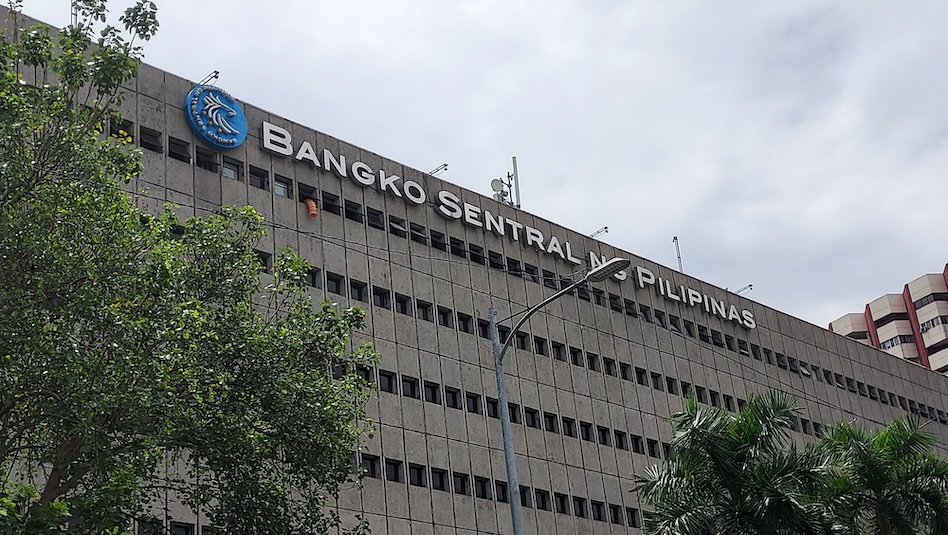
January Economic Update: Growth slows, prices rise
DOWNLOAD


Philippine-US alliance to remain stable, analysts say
 By BusinessWorld



Philippine-US economic and defense ties are not expected to change abruptly regardless of who wins the US presidential race, with both ex-President Donald Trump and Vice-President Kamala Harris likely to keep the trend of rising trade restrictions and strategic competition with China, analysts said.
Heightened geopolitical tension and de-risking trends will prevail especially in Asia, where the implications will be significant regardless of who wins, they added.
Growing bipartisan focus on the Indo-Pacific region amid the United States’ efforts to catch up with China’s manufacturing might — and against the backdrop of growing concern with the Asian superpower’s expansionist ambition — helps cement its ties with the Philippines on the economic front, said Joshua Bernard B. Espeña, vice-president at the international Development and Security Cooperation.
“The bipartisan consensus puts a steady trend that the alliance will continually be relevant,” he said in an e-mail. “The relationship between the two will remain stable after all pressures at the global security and economic levels.”
Millions of Americans on Tuesday began voting in what is considered to be one of the most important presidential elections in decades. Mr. Trump and Ms. Harris are almost tied in opinion polls, with experts saying the winner will likely be determined by voters in swing states.
Mr. Trump has pushed protectionist policies and pledged to turn the US into a manufacturing superpower. He is seeking 60% or higher tariffs on all Chinese goods and a 10% universal tariff.
Ms. Harris, who became the Democratic Party’s candidate after President Joseph R. Biden withdrew from the race, has pushed abortion rights and vowed to help working and middle-class families by restoring child tax credits and earned income tax credits, and pledged to increase taxes on corporations and long-term capital gains.
Ms. Harris has also vowed to make the US a leader in the “industries of the future” such as semiconductors, clean energy and artificial intelligence.
“It is unlikely that the US will back off from its economic and national security commitments to the Philippines, given the strategic importance of this alliance,” said Victor Andres C. Manhit, president of think tank Stratbase ADR.
“The US has consistently emphasized its commitment to supporting the Philippines, especially in the context of shared democratic values and regional stability in the Indo-Pacific.”
It was Mr. Trump who promoted the concept of a “free and open Indo-Pacific,” mentioning it during the Asia-Pacific Economic Forum in the Philippines in 2017.
Mr. Biden has widely supported the concept, launching an Indo-Pacific Economic Framework (IPEF) in 2022 with a dozen initial partners.
Manila joined the informal economic grouping in the same year and signed a supply-chain agreement along with other members in 2023.
Under IPEF’s Partnership Global Infrastructure and Investment (PGI), the US and its biggest ally in the region, Japan, will support connectivity between Subic Bay, Clark, Manila and Batangas.
Called the Luzon Economic Corridor, the project seeks to focus on “high-impact” infrastructure such as rails and ports and strategic investments involving semiconductors, clean energy, and supply chains.
“The Philippines has a trade surplus with the US in 2023. However, unlike China, the Philippine’s trade surplus does not appear to be a big threat to US interests,” said George N. Manzano, who teaches trade at the University of Asia and the Pacific.
“The Philippines is deemed to be an important ally of the US, and this would weigh in the context of security issues in the West Philippine Sea,” he said in an e-mail.
The US has consistently cited its “ironclad commitment” to the Philippines amid China’s intrusions into Manila’s exclusive economic zone in the South China Sea, which has become one of the major geopolitical hotspots in recent years.
China is the Philippines’ largest source of imports and second-biggest export market. The US, meanwhile, is the largest market for Philippine exports, and the fourth-largest source of imports last year.
While Philippine-US ties on the economic front will likely remain stable whoever wins in the race, Manila should keep a close eye on the potential impact of a Trump presidency on the Philippine business processing outsourcing (BPO) sector, said public investment analyst and InfraWatch PH convenor Terry L. Ridon.
“We should monitor the impact of a second Trump presidency on the country’s BPO sector, which is a major pillar of our economic growth, given that he is proposing an America First policy on jobs,” he said in a Facebook Messenger chat.
Defense and security concerns will be the most stable aspects of Philippine-US ties whoever wins in the US presidential race, Mr. Espeña said.
“However, both candidates do not demonstrate signals regarding the Philippines’ opportunity to acquire cheaper defense packages, say the Multirole Fighter (MRF) Acquisition Project,” he noted. “So, they need to step up on this one.”
Philip Arnold Tuaño, dean of the Ateneo School of Government, said a Trump victory could lead to a gradual withdrawal of American leadership from geopolitical issues, which may include the South China Sea.
“Foreign assistance and defense cooperation will be more constrained under a Trump administration, and the cooperation in forwarding democratic norms and human rights will take a backseat in our relationships,” he said in an e-mail.
“It is also possible that we will also see an increase in tariffs of American imports from the Philippines given candidate Trump’s announcements of greater trade barriers with other countries,” he added.
Still, Philippines-US relations would not change substantially immediately after the US elections “given that American and Philippine bureaucracies have had good relationships and have strengthened communication ties, especially after a couple of years of resetting of the ties by the Marcos administration.”
One thing is for sure, said Mr. Tuaño, and that is whoever wins, “the Marcos government will still continue to press for an expansion of US-Philippine relationships given that the US is our traditional security and economic ally in the face of geopolitical tensions.”
Hansley A. Juliano, who teaches politics at the Ateneo, said the Democratic Party is inclined to continue the “pivot to Asia” and persist in playing its part in global governance amid China’s increasing aggression.
“The Republican Party is clearly a machinery of patronage that intends to contract American commitments to global governance in the name of white supremacy and support for authoritarian regimes,” he added.
Mr. Manhit said the Marcos administration has made efforts to cement US-Philippine ties, citing the expansion of the 2015 Enhanced Defense Cooperation Agreement and high-level visits by US officials to Manila.
“Over the past year, the Philippines has shown a clear commitment to strengthening ties with the US through various strategic moves and agreements, particularly in defense and economic collaboration,” he said. – Kyle Aristophere T. Atienza, Reporter
This article originally appeared on bworldonline.com